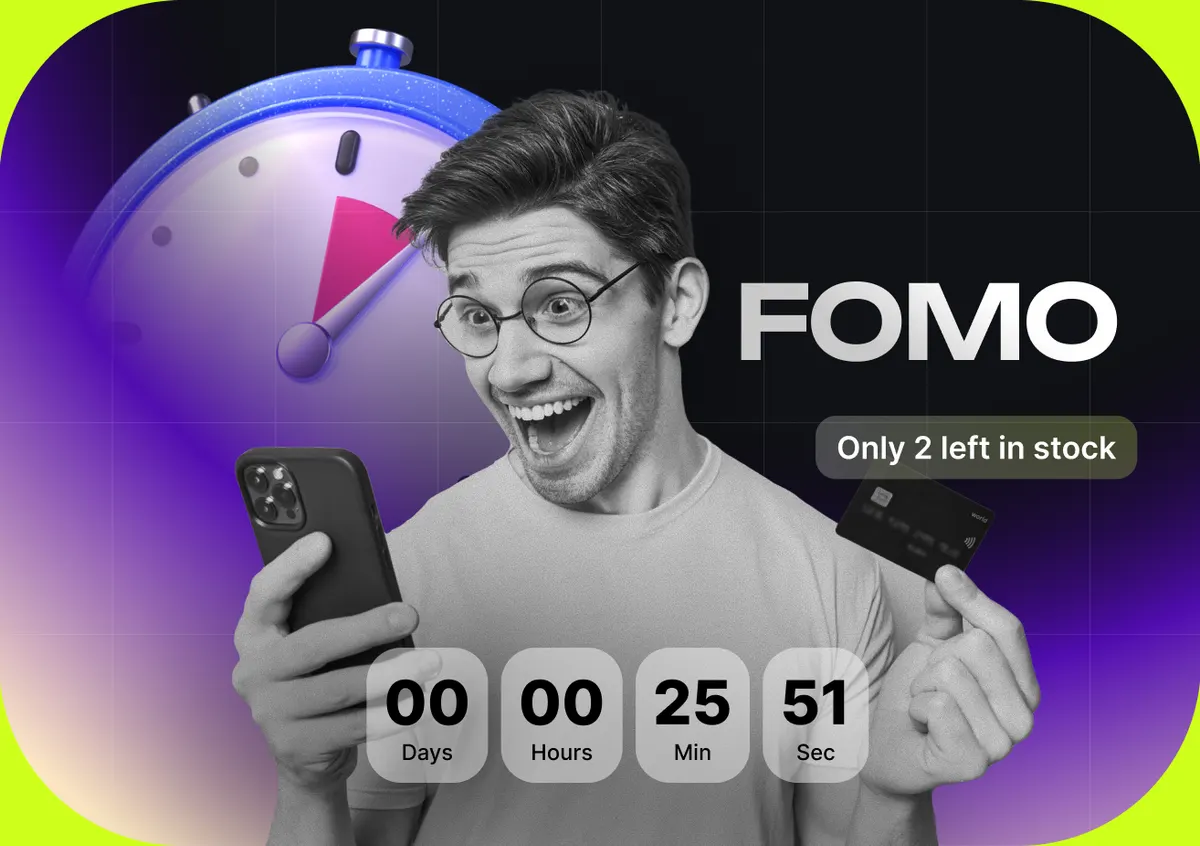


Fear of Missing Out Is Driving Sales Everywhere
Ever seen a notification that says “Only 2 left in stock” and felt an urge to click Buy Now? Or maybe you rushed to snag an exclusive Black Friday deal before the timer ran out? That rush of urgency isn’t random—it’s the psychology of FOMO (Fear of Missing Out).
FOMO is one of the most powerful triggers in human behavior. It plays on our natural fear of being left out of opportunities, communities, or experiences. And in the world of mobile commerce, it has become a sales-driving superpower.
- 60% of Millennials say they make purchases because of FOMO (Eventbrite).
- Limited-time deals can increase conversion rates by 2–3x compared to regular promotions.
- Push notifications with urgency phrases (“today only”) see 30% higher engagement (CleverTap).
For Shopify merchants and app-based businesses, mastering FOMO is no longer optional. It’s a proven way to increase conversions, boost retention, and drive repeat sales.
In this post, we’ll break down the psychology of FOMO, explore how it works inside mobile apps, and give you practical strategies to use it ethically and effectively in your eCommerce brand.
What Is FOMO in eCommerce?
FOMO—Fear of Missing Out—is the feeling of anxiety when people believe they’re about to miss a valuable opportunity. In eCommerce and apps, it often looks like:
- Limited-time discounts.
- Low-stock alerts.
- Exclusive early access.
- Time-sensitive push notifications.
When shoppers feel like they might lose out, they’re more likely to act immediately rather than delay or abandon carts.
The Psychology Behind FOMO
1. Scarcity Principle
When something is scarce, it feels more valuable. Limited editions, low-stock warnings, and countdown timers leverage this principle.
- Example: “Only 3 left in your size” makes an item feel urgent and desirable.
2. Social Proof
We trust what others are buying or doing. Seeing that others are grabbing a deal triggers a sense of urgency.
- Example: “100 people bought this in the last 24 hours.”
3. Loss Aversion
Psychology research shows people fear losing something more than they enjoy gaining it. FOMO taps into this bias.
- Example: “Offer ends in 1 hour—don’t miss out!”
4. Exclusivity
Humans crave belonging to special groups. Being part of a VIP sale or app-only offer makes customers feel important.
- Example: “Available only in the app for our members.”
Why Mobile Apps Are Perfect for FOMO
FOMO thrives on real-time communication and direct engagement—both areas where mobile apps outperform websites and email.
- Push notifications deliver urgency instantly.
- Apps sit on the home screen, making reminders hard to miss.
- Features like timers, badges, and pop-ups enhance FOMO visually.
According to Criteo, mobile app shoppers convert 3x higher than mobile web shoppers—and FOMO is a big reason why.
7 Proven Ways to Use FOMO in Mobile Apps
1. Low-Stock Alerts
How it works: Display real-time stock levels in your app.
- Example: “Only 2 items left—order now before it’s gone.”
Why it works: Scarcity increases perceived value. Shoppers don’t want to be the one who missed the last item.
Data point: Low-stock messages can increase urgency-driven conversions by up to 332% (ConversionXL).
2. Limited-Time Offers & Flash Sales
How it works: Run app-only sales with countdown timers.
- Example: “Flash Sale! Ends in 2 hours.”
Why it works: Time limits shorten the decision-making window, reducing cart abandonment.
Data point: Countdown timers increase conversions by 9% on average (OptinMonster).
3. Early Access & VIP Exclusivity
How it works: Reward your app users with exclusive drops or early access.
- Example: “App members get 24-hour early access to our new collection.”
Why it works: Exclusivity makes customers feel special—and keeps them downloading and engaging with your app.
Data point: 74% of consumers say they are more likely to stay loyal if they receive exclusive perks (Bond Brand Loyalty).
4. Social Proof Notifications
How it works: Show real-time activity inside your app.
- Example: “Sarah from London just purchased this item.”
- Example: “Trending: 50 people added this to their carts today.”
Why it works: People don’t want to miss out on what others are buying or loving.
Data point: Social proof messages increase conversions by 15–30% (Baymard Institute).
5. Push Notifications With Urgency
How it works: Send timely, personalized push notifications.
- Example: “Your favorite sneakers are almost sold out—grab them now!”
- Example: “Today only: 20% off all bundles.”
Why it works: Push notifications are instant and create a sense of urgency that email can’t match.
Data point: Push notifications have a 90%+ open rate vs. email’s 20% (Airship).
6. App-Exclusive Rewards & Loyalty Perks
How it works: Offer rewards that are only redeemable through the app.
- Example: “Collect double points today when you shop in the app.”
Why it works: Customers don’t want to miss extra perks and will prioritize your app for shopping.
Data point: Customers in loyalty programs spend 18% more annually (Accenture).
- Gamified Challenges & Streaks
How it works: Create streaks, missions, or daily challenges with rewards.
- Example: “Shop 3 days in a row to unlock a surprise gift.”
Why it works: Builds habits and keeps customers engaged, fearing the loss of their streak.
Data point: Streaks can double app retention compared to apps without gamification (Duolingo case study).
Case Studies: FOMO Done Right
Fashion Nova
Fashion Nova thrives on fast fashion drops. Their app sends push notifications the second new products drop—making customers feel like they’ll miss out if they don’t act fast. Result: app shoppers are 2x more likely to buy than mobile web users.
Nike SNKRS
Nike built an entire FOMO-driven app around limited sneaker drops. Timed releases, raffles, and exclusives fuel massive hype. Some shoes sell out in minutes, generating huge buzz.
Amazon Prime Day
Amazon’s Prime Day thrives on FOMO with limited-time “Lightning Deals” that refresh hourly. Customers rush to grab deals before they disappear.
Ethical Use of FOMO: Don’t Manipulate
While FOMO is powerful, it must be used responsibly. Overuse can feel manipulative and harm trust.
Best Practices for Ethical FOMO:
- Be transparent. If stock is limited, show real numbers.
- Don’t spam. Overusing urgency in push notifications leads to uninstalls.
- Focus on value. Pair urgency with genuine benefits.
- Reward loyalty. Use FOMO to make customers feel special, not pressured.
How to Implement FOMO in Your Shopify App
Step 1: Choose Your Strategy
- For conversions → Use flash sales, countdowns, and low-stock alerts.
- For loyalty → Use app-exclusive rewards and streaks.
- For engagement → Use push notifications and gamified challenges.
Step 2: Use the Right Tools
- Shopify-integrated apps like BeyondCart make it easy to add FOMO mechanics.
- Pair with loyalty apps like Smile.io or Yotpo for rewards.
Step 3: Promote Your App
- Highlight FOMO perks (early access, app-only sales) on your website.
- Encourage downloads during checkout.
- Use social media to amplify exclusivity.
Step 4: Measure Results
Track metrics such as:
- Push notification open rate.
- Conversion rate during flash sales.
- Retention rate for app-exclusive offers.
The Business Impact of FOMO in Mobile Apps
- Higher conversions. Urgency turns browsers into buyers.
- Increased retention. Exclusive rewards keep customers coming back.
- Stronger engagement. Push and social proof make your app part of daily habits.
- Bigger CLV. Customers who feel part of exclusive opportunities stay loyal longer.
Future of FOMO in eCommerce Apps
- AI-driven personalization. Apps will predict which urgency triggers each user responds to best.
- AR shopping with exclusivity. Try-ons combined with limited drops.
- Live shopping + FOMO. Real-time countdowns and live purchases will amplify urgency.
Actionable Takeaways
- FOMO works because it taps into scarcity, social proof, loss aversion, and exclusivity.
- Mobile apps are the perfect FOMO channel thanks to push, timers, and direct engagement.
- Use features like low-stock alerts, flash sales, VIP access, and streaks to boost sales.
- Apply FOMO ethically—focus on value and transparency, not manipulation.
- Measure success with metrics like conversions, retention, and app engagement.
FOMO Turns Apps Into Sales Engines
In today’s competitive eCommerce world, shoppers don’t just need a reason to buy—they need a reason to act now.
The psychology of FOMO taps into deep human instincts to drive urgency, engagement, and loyalty. And mobile apps give you the perfect platform to put it into practice.
By using FOMO strategically—through push notifications, limited-time drops, app-exclusive rewards, and gamified experiences—you can transform your app into a sales-driving, retention-boosting machine.
Ready to Put FOMO to Work?
If you’re a Shopify brand looking to make your app more engaging, it’s time to harness the psychology of FOMO. With platforms like BeyondCart, you can launch FOMO-driven features that keep your customers buying, engaging, and coming back for more.


 Push Notifications Center
 Gamification
 Analytics & Insights
 Segmentation